Summary
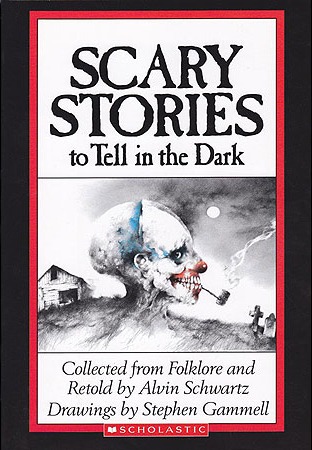
In Scary Stories to Tell in the Dark by Alvin Schawartz, we find several short stories, songs, and poems that are based on folklore. The stories are meant to be told out loud with an introduction that includes suggestions on how scary stories should be read to other people. The stories are organized into five sections based on the style of story they are. The first section entitled, "AHHHHHHHH!", is a section of stories that uses jump scares to scare your listeners. The second section called, "He heard footsteps coming up the cellar stairs," is a section that scares by way of playing with the mind's of the readers. The third section, "They eat your eyes, they eat your nose," is a collection of stories on scary monsters and creatures. The fourth section, "Other dangers," is a group of stories that are scary by the fact that there is something that is dangerous, but it doesn't seem like it. For example, a dress that has poison on it or a man hiding in your backseat of your car. The last section is entitled, "AHHHHHH!", just like the first section, and is also a collection of stories that uses jump scares. The book then ends with the sources of these stories.
Reference
Schwartz, A., & Gammell, S. (1981). New York, NY: Scholastic.
Impressions
Looking at the stories themselves as an adult, I didn't find most of them to be scary. A few of them like "The Babysitter," I found to be scary. What really makes this book is the original illustrations. One can get a taste of the illustrations by looking at the art on the cover. This book has been consistently challenged throughout the years since its publication in 1981 and the art work does seem like it would give a child nightmares. The subject matter of the stories deals very casually with death, which may be shocking to some parents.
Professional Review
Schwartz, A. (n.d.). SCARY STORIES TO TELL IN THE DARK by Alvin Schwartz | Kirkus Reviews. Retrieved December 08, 2016, from https://www.kirkusreviews.com/book-reviews/alvin-schwartz-8/scary-stories-to-tell-in-the-dark/
Library Uses
I would use this book in a scary story program in October. The program could be done in the dark with flashlights and the group could take turns reading the stories.